
Your Travel Guide to Australia for Interns

Quick answer: Australia is huge and its seasons are the reverse of the northern hemisphere, so plan by region and time of year. In the cities, use a transport card or a tap-to-pay bank card. For long distances, fly. Spend your free time on the coast, in the parks and at free city sights.
Plan by region, not by country
Australia is almost as big as the continental United States, and the distances surprise most newcomers. Driving from Sydney to Melbourne takes a full day. Sydney to Perth is around five hours by plane.
Seasons are reversed. Summer runs from December to February and winter from June to August. Spring is September to November and autumn is March to May. Climate also changes a lot from south to north:
- The south and east (Sydney, Melbourne): four seasons. Summers are hot, winters are cool, and spring and autumn are the most comfortable.
- The tropical north (Cairns, Darwin): a wet summer and a dry winter. The dry season, from about May to October, is the easiest time to travel.
- The red center (Uluru): very hot summers and cold nights in winter. May to September is the usual pick.
If you are here for an internship, your placement city is your base. Use weekends for that region and save bigger trips for longer breaks. Our Australia page explains what we offer, and our internship and visa guide covers the practical side of working here.
Getting around
Between cities: fly. Domestic flights are the normal way to cross the country, and Sydney to Melbourne takes about an hour and a half. Trains and coaches exist, but they are slow over long distances. Book early for school holiday periods, when fares go up.

Inside cities: every big city has trains, buses and trams, and some have ferries.
- Sydney uses Opal. You can buy an Opal card, or just tap on and off with a contactless credit or debit card or a linked phone. Fares are capped each day. At the time of writing, an adult pays no more than about A$19 (around US$12) from Monday to Thursday, and about A$10 (around US$6) from Friday to Sunday and on public holidays.
- Melbourne uses myki. You need a myki card, topped up in advance. Paying with a bank card has only been trialled on a few train lines, so do not count on it yet. Check the Public Transport Victoria site for the latest.
Sydney ferries double as cheap harbor cruises. The ride from Circular Quay to Manly gives you a good view of the Opera House and the Harbour Bridge.
Sydney: the best free and cheap things
Sydney is the city many interns end up in, and most of its best sights cost little or nothing.
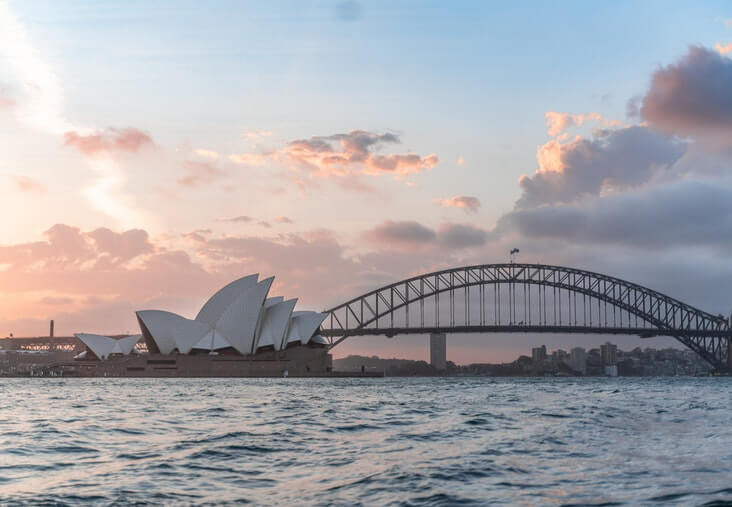
- The harbor: walk around Circular Quay to see the Opera House and the Harbour Bridge up close, then head into the Royal Botanic Garden for the classic skyline view. The Rocks, the old district under the bridge, has markets and historic streets.
- Bondi to Coogee coastal walk: about 6 km one way, two to three hours, free. It passes five beaches (Bondi, Tamarama, Bronte, Clovelly and Coogee), plus rock pools and cliff views. Public transport is easier than parking at either end. In spring the first stretch hosts Sculpture by the Sea, a free outdoor art show, usually in October and early November.
- Beaches: Bondi is the famous one, but Bronte, Clovelly and the northern beaches near Manly are often calmer. Always swim between the flags.
- Parks and gardens: Centennial Park, Hyde Park and Barangaroo Reserve are all free and good for a lunch break or a Sunday walk.
- Free culture: the Museum of Contemporary Art has free entry to its main galleries, and the Carriageworks farmers market is a good weekend stop. Opening hours and free areas change, so check before you go.
- Manly and North Head: take the ferry to Manly, then walk the coastal paths. Kayaking in quieter harbor inlets is a fun paid extra.
Day trips from Sydney
- Blue Mountains: a train from Central Station reaches the mountain towns in a couple of hours. Katoomba is the usual stop for the Three Sisters rock formation and the lookouts, waterfalls and bushwalking trails. Leave early and bring layers, because it is cooler than the city.
- Royal National Park: the park, south of the city, has cliff walks, beaches and swimming spots. Take a train to the edge of the park and then walk in.
Busy and pricey options exist too, such as the Sydney Harbour Bridge climb, Taronga Zoo and the Sydney Tower. Pick one splurge and enjoy the rest for free.
Other highlights, and when to go
- Melbourne: known for laneways, cafes, street art and sport. Spring and autumn are comfortable, and the Australian Open tennis takes over the city for much of January. The weather changes fast, so carry a jacket. A lot of Melbourne is easy to explore on foot or by tram.
- Great Barrier Reef (Queensland): the dry season from May to October has the best conditions for snorkelling and diving. From about November to April, stinger jellyfish are present in the tropical waters, so follow local advice and wear a stinger suit where it is recommended. School holidays in June and July are the busiest times.
- Great Ocean Road (Victoria): a scenic coastal drive from near Melbourne that includes the Twelve Apostles rock stacks. Spring and autumn are quieter, summer is busiest, and winter is the time for whale watching near Warrnambool. A tour from Melbourne is the easy option if you do not have a car.
- Uluru (Northern Territory): a sacred site for the local Anangu people. Visit between about May and September, when days are warm rather than extreme. Respect the signs and any rules about where you can walk or take photos.
- Brisbane: a river city with a relaxed feel. The CityCat ferry is a cheap way to see the skyline, and it is a good base for Queensland trips.
Money
Australia uses the Australian dollar (AUD). Cards and tap-to-pay are accepted almost everywhere, from supermarkets to coffee carts, so you rarely need much cash. A few small markets and rural spots still prefer cash, so keep a little on you. Tell your home bank you are traveling, and check what fees it charges for overseas payments. Many people also open a local bank account after they arrive.
Staying safe
- Sun: the Australian sun is strong, even on cloudy or cool days. Follow the local rule: slip on a shirt, slop on sunscreen, slap on a hat, seek shade and slide on sunglasses.
- Beaches: swim between the red and yellow flags, where lifeguards are on duty. Never swim alone, and pay attention to warning signs about rips and jellyfish.
- Heat and bushfire season: in the south, the highest bushfire risk is usually December to February. In the tropical north it runs through the dry winter and spring. Check the local fire service app or website before hiking, and never ignore a total fire ban. On very hot days, drink plenty of water and avoid long walks in the middle of the day.
- Wildlife: do not feed or touch animals, keep your distance from snakes and spiders, and stay out of the water where signs warn of crocodiles in the tropical north.
- Emergencies: call 000 for police, fire or ambulance. The call is free from any phone. If you are on an AIP program, our 24/7 emergency support is also there for you.
Budget tips for interns
- Use daily and weekly caps. Plan big travel days on Fridays to Sundays in Sydney, when the cap is lower.
- Cook at home. Supermarket meals and a lunch packed from home cost far less than cafes.
- Look for free events: markets, outdoor art, beach days and free museum areas.
- Book flights early and travel outside school holidays.
- Ask about student discounts, and carry your student ID. Some are for local students only, so ask first.
- Remember that most internships are unpaid, so work out your weekly spending before you plan trips.
Settling in
Australians are relaxed and friendly, and weekends are for the outdoors. Say yes to invitations from colleagues and flatmates. If you miss home in the first few weeks, our guide on dealing with homesickness abroad has simple tips. Living abroad changes how you see things, as we explain in our post on the life-changing benefits of living abroad.
FAQs
When is the best time to travel around Australia?
It depends on the region. Spring (September to November) and autumn (March to May) suit most of the south. The tropical north, including the Great Barrier Reef, is best in the dry season from May to October. Uluru is best from about May to September.
Can I pay for public transport with a bank card?
In Sydney, yes: you can tap on and off with a contactless credit or debit card or a phone, or use an Opal card. Melbourne still runs on myki, and bank card payment has only been trialled on a few train lines, so check before you rely on it.
Is the Bondi to Coogee coastal walk free?
Yes. The walk is about 6 km one way and takes two to three hours. It passes five beaches, and you only pay for what you choose to buy along the way. Take a hat, water and sunscreen.
What should I know about swimming safely in Australia?
Swim between the red and yellow flags, where lifeguards are on duty. If there are no flags, ask a local or choose another beach. Check for warning signs about currents or jellyfish before you go in.
Do I need to hire a car in Australia?
Not in the big cities, where trains, buses, trams and ferries cover most trips. For long distances, domestic flights save days. A car or a group tour helps for places such as the Great Ocean Road.
Thinking about interning in Australia? See our Australia internship page for programs and housing options.
Thinking about interning in Asia?
Browse destinations, then apply. It's free to apply, and you only pay a deposit once we accept you.
 Kate Myat Noe


