
Kayden's Thailand Internship: A Business Development Story in Bangkok
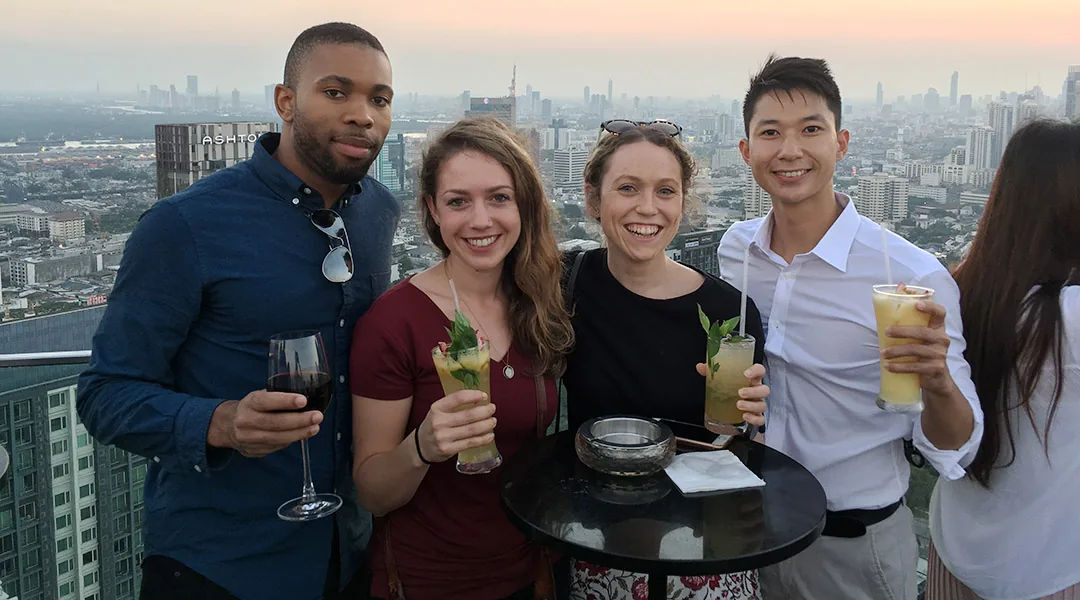
Quick answer: Kayden Hoang Bui, an American Master in Public Policy candidate at Harvard, interned at a strategy and transactions advisory firm in Bangkok that focuses on Asian energy, resources and infrastructure. He did it during a year-long fellowship to study Thai at Chulalongkorn University. His work included market research on the Bloomberg Terminal, company valuations and presentations, and he also took part in the UNLEASH innovation lab in Singapore, where the judges picked his team's idea, ElecTrack, in its category.
Kayden Hoang Bui is an American and a Master in Public Policy candidate at Harvard University's John F. Kennedy School of Government. During a year-long fellowship, he studied Thai at Chulalongkorn University and interned at a business development firm in Bangkok. This is his story, shortened from his four-part series and told mostly in his own words.
Finding the internship and starting out
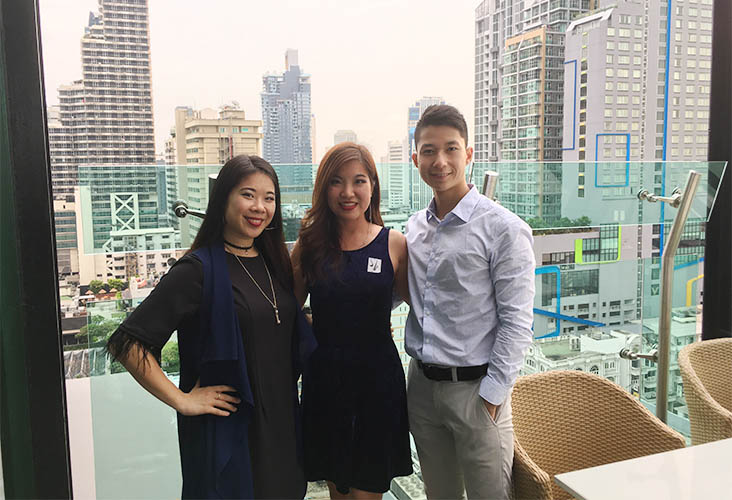
With the help of Asia Internship Program (AIP), I got connected with a specialist strategy and transactions advisory firm focused on the Asian energy, resources and infrastructure sectors. The office was on the 26th floor in the heart of Bangkok, with a semi-panoramic view of the city. I was working among some of the biggest and most influential companies in the country.
Before the firm, I studied the Thai language at Chulalongkorn University. At the University's Center for Teaching Thai as a Foreign Language, I spent 15 hours a week reading newspapers, writing speeches, giving presentations and debating. That pushed my language abilities from high intermediate to advanced. From there I decided to take my energy and enthusiasm into the real world by pursuing an internship in business development in an economic hub of Southeast Asia.
The growing pains of getting used to a consulting environment did not last long. I had just finished my first year of the graduate program in public policy in Boston, so I was used to not being able to tell where work ends and my personal life starts.
On my first day, I hit the ground running with a big project. I had to identify the biggest companies in Thailand by market capitalization, using the Bloomberg Terminal. The Terminal is a software system that provides a livestream of updates and financial data, including news, reports, statements and recommendations from analysts and institutions. I quickly figured out that you can use Excel functions to import information on almost any financial indicator, as well as future earnings forecasts. The data can be used to understand the current players in the market, analyze market share and identify undervalued stocks.
Going in prepared
Before starting, I talked with previous consultants from the Big Three: McKinsey & Company, Boston Consulting Group and Bain & Company. I wanted to understand their work and responsibilities so I could prepare for my new position. From there, I drafted a list of goals for my internship. It included skills, quantifiable goals and deliverables I wanted to have by the end of my time there.
In my first weeks, the Vice Chairman invited me to his office for an initial chat. He was fully supportive of my professional development, and the list made a very positive impression. Making a list like this was some of the most valuable advice I got from my mentor years ago, during a previous internship in Washington, D.C.
The work: Bloomberg, feedback and over-delivering
The office atmosphere was incredibly collaborative. You got help immediately if you asked for it. People were willing to drop whatever they were doing, no matter how busy they were. Early on, I asked a colleague how to use an expensive but unintuitive research tool. She immediately helped me get a login and gave me a mini-tutorial.
Several times I was formatting an Excel sheet or a PowerPoint slide down to the minute detail. My co-worker reminded me that it was good enough for a first draft and to send it in. She was right, and I saved valuable hours that I could spend on other projects. My coworkers helped me understand the spirit of teamwork in a consulting company.
I kept using the Bloomberg Terminal while developing my understanding of accounting, finance and data. The information was used for business valuations on some key companies and for business intelligence for internal use. After categorizing companies by EBITDA, P/E ratio, market capitalization, net debt and other key indicators, we needed to do due diligence on who the leadership was and whether the company was prepared to react to disruptive trends.
Coming into a consulting firm, I knew PowerPoint skills were essential. But I had to redefine what a visually stunning presentation looks like when I saw the slides some of my colleagues designed. They used ingenuity placing vector shapes together to make ribbons, 3-D images and graphs that I assumed were reserved for professional designers using Photoshop or InDesign. I learned tips and tricks that I will keep for the rest of my professional career.
A different kind of feedback
One of my internship tasks was to observe the company's business culture and the way we worked. After a month, I concluded that the firm was fast-paced and had high expectations for the quality of our work.
This went against my undergraduate experience in Minneapolis and my graduate education in Boston. I was taught that you only had one shot at a task: you hand it in and it is graded. So I tried to perfect everything the first time, without much outside input. In business consulting, the environment is very different. The analysts were constantly working together to double-check numbers, redesign and give advice on the materials we created.
The work was then presented to a manager or director, who asked targeted questions about where we found the numbers. Once it was double and triple checked, we took the feedback into another draft. I felt a lot of pressure to create a high-quality first draft, but the chance to revise helped relieve some of that stress.
Over-deliver and think in MECE
One of the biggest lessons I learned was to always over-deliver. MECE was the mantra during our solution-development phase. It stands for Mutually Exclusive, Collectively Exhaustive, and it is a framework for grouping and organizing information. We had to organize our thoughts so they were clear and concise at the high level, while diving into the details and reasons for our recommendations. Before clients even required it, we were already working on next steps, because we wanted to be ready to answer the hard questions with supporting data.
Keeping a list of goals
The goals list let me do two main things. First, it helped me organize my thoughts, progress and tasks. It kept me focused on the big picture, even when I was doing small tasks like editing a spreadsheet or designing a slide. Second, I saw the list as things I wanted to include on my future resume.
I highly recommend that interns gather as much information as possible about their placement and draft a list of realistic and measurable goals. The president of the company read through my list and was incredibly supportive. He immediately emailed one of the other managers to look out for conferences and news release opportunities for me. Here are some of the goals from my list:
- Deepen understanding of energy, oil and gas, and technology industries, in addition to infrastructure developments in Southeast Asia.
- Work with at least two different offices or sections to increase teamwork skills and adaptability.
- Publish two to five news releases to enhance my company's reputation as a source of new, precise and accurate information.
- Attend two to four conferences, networking events or professional development courses.
- Read The Intelligent Investor and two other books on investing techniques and theory.
Learning beyond the office
Aside from being in the office from nine until six every day, I invested time in reading. My latest book was The Intelligent Investor, which I read during my commute around Bangkok. The 640-page book explains what value investing means and how numbers can fool us if we are not vigilant about how the market works.
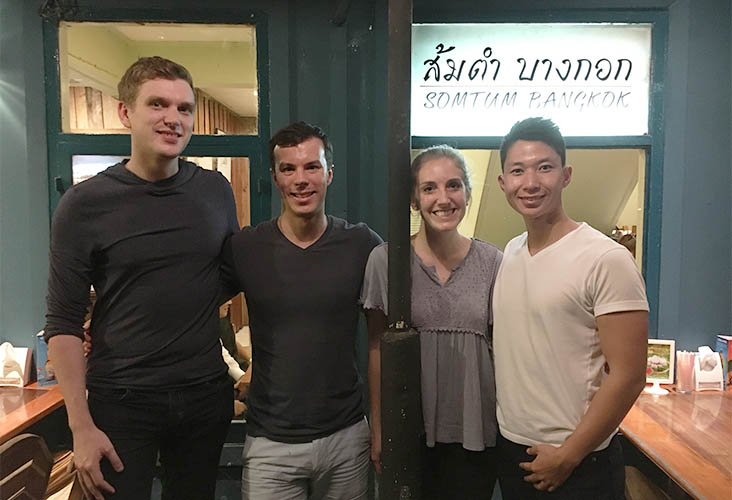
Throughout my internship, my company was supportive of my personal and professional development. Whenever opportunities came up and I wanted to take them on, the directors were happy to give me time. One of the biggest benefits of interning in Thailand is that there are limitless opportunities in the region to take part in and learn from experts in all types of sectors.
Taking part in UNLEASH
During my time in Thailand, a friend told me about UNLEASH, a non-profit innovation lab that happens every year. After its first year in Copenhagen in 2017, Singapore hosted it in 2018. Up to 1,000 entrepreneurs and intrapreneurs from all over the world come together to help reach the targets of the United Nations Sustainable Development Goals (SDGs).
I was one of 1,000 young talents selected from over 7,000 applicants to fly to Singapore on a virtually all-expenses-paid trip. Over nine days, we all lived, ate and worked together on the National University of Singapore campus. There were participants from 108 countries. We woke up at 6:45 am and slept around 11:00 pm or midnight. We had expert mentors, facilitators who knew the innovation process, and checkpoints where each team had to defend its idea to move on to the next stage.
With my work in energy, I chose SDG7: Affordable and Clean Energy. My research at work and past experience had made it clear that there is a stark energy demand and supply gap in many nations. Without electricity, 1.2 billion people in the world lose hours of productivity. I wanted to explore current and developing technology to increase the investment, production and use of renewable energy.
We each proposed ideas, voted for our favorites and then chose which one to work on. The facilitators formed groups of four to five people around each idea. They had us choose our personality type and field of expertise, so they could build the most diverse team possible.
SDG7 had 17 teams. My team's idea was a solution to help people track and choose their electricity by source. All but one of us were engineers and renewable energy specialists, so we fielded lots of tough questions from the judges.
We found out that we were one of two teams from our SDG selected to present in the final round. We had about three hours to refine our pitch and ask our mentors for more advice.
When our turn came, the auditorium was silent and all eyes were on us. It was the first time I had presented in front of an audience that size, and I will never forget it. The judges tried to poke holes in our ideas, and my team members did not skip a beat. Then the judges revealed their comments, and with their last sentence, they called out ElecTrack. We had done it. Soon we had meetings set up with sponsors and phone calls with mentors who would help us plan the prototyping and implementation.
Finishing up
The end of my internship came, and I could not have asked for a better experience or better people. The analysts and consultants loved to work hard but also to have fun, and it was nice to come together for social events.
My favorite was an informal dinner with all of the analysts at one of their houses near the office. One of our Nepali colleagues offered to teach us how to make momos, a type of stuffed dumpling native to South Asia. We rolled and molded them into the momo shape while we chatted about work and our daily lives. Laughs could be heard all through the room, and I felt so lucky to work there and to meet them.
After we had been so proud of our creation, the momos somehow fell apart and the flour wrap started to rip. We all looked at each other and burst out laughing, and then we tasted them anyway. At the end of the meal, one of the analysts said they actually had a purpose for meeting that day: to welcome two new interns to the team and to give me a farewell party. Their thoughts were really touching and made my internship even more memorable.
One of the best things about working there was that we were on multiple projects at once and all very dedicated, so we were rewarded with little things that sometimes made a big difference. Almost every week, a professional masseuse came in on Friday and all of the staff could sign up for 30-minute slots. It definitely helped us de-stress from the week's busy work schedule.
FAQs
Can I intern in business development in Bangkok?
Yes. Popular fields in Bangkok and Phuket include marketing, business development, hospitality, supply chain, real estate and environmental science. We look for the best match for you.
Do I need to speak Thai to intern in Bangkok?
No. Host companies work in English, so you need good English rather than Thai. Learning a few Thai phrases still makes daily life easier.
Are internships in Thailand paid?
Most international internships in Thailand are unpaid. Budget for food, local transport and personal spending on top of your program fee.
How long does it take to arrange a Thailand internship?
Finding your placement takes about 8 weeks from your deposit. We suggest applying at least 12 weeks before you want to start.
Is a placement assured?
We only accept you when we're confident we can place you. If we accept you and can't find you a placement, you get your full $500 deposit back. We start with a free call with a career advisor, then look for the best match with our host companies.
Thinking about an internship like Kayden's? Read about Thailand's top industries, or see our Thailand internship page.
Thinking about interning in Asia?
Browse destinations, then apply. It's free to apply, and you only pay a deposit once we accept you.
 Daniele Cosentino